Wednesday, July 27, 2011

Series: 20 Best-Kept Real Estate Secrets

I've decided to do a four-part series to share with you all the best-kept secrets in the Real Estate industry.  Some you may already know - but some will shock you.  I will have 10 buyer secrets and 10 seller secrets in all, so enjoy!

Selling Side

1.  Underprice It
Risky?  Yes.  Worth it?  Absolutely.  This strategy, according to reknowned real estate mogul Barbara Corcoran, is the single best strategy when selling your home.  All you have to do is take market value, shave off 15%-20% with your asking price, and you will be stampeded with buyers and multiple bids, even in the worst markets.  Even if you price it around market value, think about re-evaluating it after about 30 days.  And ALWAYS remember - 9 out of 10 times, the first offer you get will be the best offer.  NEVER refuse that first bid.

2.  Clean Your Closets
Yes, buyers will open those closet doors, and every closet should be half-empty.  Storage and closet space is at a premium, and every square inch of storage should be celebrated.  Go ahead, get a forward-shot at the moving process, and clean out those clothes you probably never wear anyway.

3.  Light It Up
The second most important thing to buyers (after location) is good light.  In order to maximize the light in your home, take down drapes, clean windows, and up your wattage in your light bulbs.  Whichever area you and your Realtor decide has the most impact should contain the focus light.  Save the "mood lights" for the Olive Garden, and crank it up!  Also remember that in this busy world, some buyers now have to look at homes after sunset, so don't forget outdoor lighting - it makes a big difference.

4.  Play the "Agent" Field
Awesome - you found out your college buddy is a realtor while you were throwing back Jose Cuervo at the bar.  Working with him to sell your home should be a breeze!  Wrong.  Hiring the wrong broker could be disastrous.  You have a right (and a responsibility) as a consumer to examine your options.  Interview more than one agent (even if it is your friend).  One of the best things to do is make the Realtor sell your home back to YOU - after all, if he or she can almost make you not want to move, can you imagine what they are capable of with a new buyer?  Make sure your realtor embraces every ounce of new technology available in order to best sell your home. 

5.  Beware of Pets
ANY pets should be out of the home for showings.  Nothing makes a buyer lose interest faster than the smell of pet food or hair.  In a recent poll, most buyers automatically assumed that, when a pet was present in the home, there was pee on the floor.  I was recently showing a buyer around a home when we noticed a cat.  Not knowing if my clients were allergic or not, I walked over to the cat to try and put it downstairs in the basement - needless to say, when the hissing and scratching started, my buyers didn't care how beautiful the hardwood floors were...we left.  When your home is a pet-free zone, it will sell much faster.


And so ends Part I...I hope you all are taking notes!


Monday, May 16, 2011

6 Worth-The-Price Fix-Ups


So you want to put your home up on the market.  In economic times such as these, you're going to want to try anything and everything that will be able to set you apart from the competition.  Do-it-yourself projects give sellers the biggest return for their buck.  Below are 6 very simple (& cost effective) ways to smidge ahead of that annoyingly perfect home for sale around the corner from you.

1.  Cleaning and Decluttering.
Cost:  $290
Return:  $1,990
Remove any personal items, declutter countertops, organize closets and shelves, and make the home shine like never before.

2.  Brightening.
Cost:  $375
Return:  $1,550
Take a Windex swipe at all of your windows - inside and out.  Think of replacing some of those curtains you've had for years.  Update lighting fixtures.  Remove anything that blocks light from the windows.

3.  Smart Staging.
Cost:  $550
Return: $2,194
If HGTV doesn't give you enough inspiration, think about hiring a professional stager.  Not only does it add a pair of fresh eyes to a home you've seen for the past few years, but it also gives you the chance to step out of your bubble and try something new.  Rearrange furniture, bring in new accessories, incorporate artwork, and play soft music in the background for all showings.

4.  Landscaping Enhancements.
Cost:  $540
Return:  $1,932
Punch up the curb appeal by adding bark mulch, bushes, and flowers.  For quality plants and flowers already around your home, make sure they are well-cared for and manicured.  If you are still stumped, try going to your local nursery for some inspiration.  Remember - color adds value.

5.  Repairing Electrical or Plumbing.
Cost:  $535
Return:  $1,505
Fix the leaks under the sink and remove mildew stains (especially because it makes people think of that terrible "mold" word).  Update the electrical system with new wiring for modern appliances, fix lights or outlets that don't work, and replace old plug points with new safety features.

6.  Replacing or Shampooing Dirty Carpets.
Cost:  $647
Return:  $1,739
Nobody wants to walk through a home thinking they're going to have to spend money right away.  Help clear the air by getting the carpets cleaned or replaced, giving your buyers the chance to truly see the potential for themselves in your home.  If you have hardwoods, see if there is something you can do for those late-night creaky spots.

Whether you hire out or do them yourself, these six things can make a huge difference in the way your home is seen.

Friday, April 15, 2011

Foreclosures and the Twin Cities

So for those who don't know, I have a brother that lives in the Twin Cities area of Minnesota.  I just recently read through this article and thought he would be interested in it.  Hopefully, you all are, too!

Since March of 2010, median sales prices of the homes in the 13-county Twin Cities metro area fell 15.2 percent to $140,000 from a report recently released by the Minneapolis Area Association of Realtors (MAAR).  Last month, distressed properties (most of them foreclosures) made up 55% of the closed sales.  Those closed sales fell 3.5%, the number of new listings coming onto the market fell 30.2%, and pending sales fell 17.6% year-over-year.

MAAR attributes these declines partly to the expiration of the federal homebuyer tax credit program that spurred sales in the Spring of 2010.  Though the outlook may seem a tad dismal, the association showed a few positive signs on the road to recovery.  The area has maintained strong corporate balance sheets, unemployment claims have slowed down, and there have been 13 months of solid job growth. 

So what does this mean to the sellers in the area?  They can expect their up-to-date home and on-time mortgage history to be compared with distressed, and more often cheaper, properties around them. 

In the metro area, sellers (including distressed properties) received around 88.6% of the original asking price last month, and was on the market for an average of 152 days, a 17.8% rise year-over-year.

According to recent comments from Realtors/Brokers in the Twin Cities, the fastest-selling properties are bank-owned because their pricing continues to be the lowest of all median prices.  The slowest-selling properties are townhomes, attributed to the low demand and high supply.

Looking into the future, worries lay beyond the Twin Cities area to the rest of the country.  Financing through the FHA is increasing as they raise the monthly mortgage insurance price, increasing interest rates seem to be looming, and the government is considering big changes to the mortgage market. 

Optimistically speaking, however, there are many buyers now realizing they can own for less than rent, and that attractive prices are here to stay for a while.

For those readers in the Twin Cities Area, including you, my dear brother, maybe it's time to start grabbing those deals.  But then again, when was the last time you listened to advice from your older bro?  =)


Monday, March 21, 2011

Loan Modification Programs - Success?

With another wave of foreclosures hitting the market, it might be time for a lot of homeowners to face a hard and difficult reality.  The big "F-word" is something nobody wants to speak about because of the harsh stigma attached to it.  When I asked some fellow acquaintances what the word "foreclosure" meant to them, some of the popular words were "poor," "dirty," and "lots of work."

That, to me, is unfortunate.  Those words place a stereotype on the millions of Americans that are going through a difficult situation, and are having to use this as a last resort.  Does that make them poor?  No.  Does it make them or their home dirty?  No.  In fact, I applaud the many people who have fought to the death to do everything they could to keep their home.

Unfortunately, the resources available to those homeowners have more bark than bite.

The Troubled Asset Relief Program (TARP) was funded by the government to help absorb the overwhelming number of foreclosures set to hit the market.  This past week, the Congressional Oversight Panel explained that TARP funds were to be used "...in a manner that protects home values, college funds, retirement accounts, and life savings; preserves homeownership and promotes jobs and economic growth; maximizes overall returns to the taxpayers of the United States."

So was it Mission Achieved?

One of the ways TARP was set to protect home values (both of those consumers in financial crisis and those who weren't) was through the Home Affordable Modification Program (HAMP).  It was supposed to prevent three to four million foreclosures.  To date, the plan is on track to help only 700,000 to 800,000 homeowners.  That would be about 25% of the goal - you be the judge.

Another program initiated to help was HOPE for Homeowners.  Established in 2008, it permitted the FHA to insure refinanced distressed mortgages.  Due to poor initial design, lack of flexibility, and reliance on voluntary principal, it was only able to help a handful of families refinance.

Success is measured on different scales by different perspectives.  TARP was set up to help home values from being crushed under the blanket of foreclosures.  In my opinion, the only thing it seemed to do was delay the inevitable.

Wednesday, March 16, 2011

Foreclosures vs. Your Home Price

Yes, it's hard.  It seems, now that we're coming out of the Eye of the Foreclosure Storm, that you see them everywhere.  You see domain names such as cheapproperties.com or stealahome.org.  The media sends a flurry of information down our televisions, computers, radios, and smartphones telling us that we're in for another wave.

Through all of this mess - has anybody told you how that affects YOU as a homeowner?

Unfortunately, there are two ways that a foreclosure or short sale can impact your home price.

1.  Distressed Properties impact the appraisal of your home
If there is a low amount of distressed properties in  your area, it is likely that your property value will be minimally impacted.  In fact, some experts say you may have appreciation due to this phenomenon.  By definition, a "low amount" would be anywhere between 10%-15%.  Once the foreclosure or short sale market hits more than about 30% of your market area, it is safe to say that these become the new "norm."  Buyers will look at all prices around you, and make decisions based on the "bang for their buck" ideal.

2.  They are discounted competition directly next to you
Of the five negotiable parts of a contract, price is, perhaps, the biggest component.  Every consumer, whether it be a home or a grocery item, wants the best deal.  According to RealtyTrac, foreclosures (on average) sell for a 41% discount and short sales for a 19% discount.  Though most people think these "distressed properties" are trashed and gutted, at sizable discounts they turn out to be more appealing than a normal sale.  Every buyer purchasing a distressed property is one less buyer for normal sales - and less demand in the market with an oversupply of homes means lower prices for you.

If you're a buyer, the field is all yours.  As a seller, it will be important to discuss with your real estate professional your financial bottom line.  This not only paints a bigger picture for you, but also helps guide you through a tough market to list a home in.

Saturday, February 26, 2011

Staging Secrets


There is no question that staging sells homes.  Your best option would be to hire a stager, which can be not only inexpensive, but also pay off huge in the long run.  If you can't, here are a few tips to stay ahead of the home down the street you're competing with.

1.  Remove the Photos
As buyers are walking through your home, the ONLY thing you want them to feel is themselves in your space.  It's difficult for potential buyers to do this when they're looking at an entire wall of your annual ski trip to Vail.  Use nature prints as a sure-shot.  If you're on a budget, buy a few photographic calendars.  Replace the personal photos you have in your frames with the nature photos from the calendars, and you'll have a neutral look without having a blank wall.

2.  Accentuate the Positives
What do you like best about your home?  In most cases, it's the thing that pushed you to purchase it in the first place.  Accentuate those areas to make potential buyers linger in those spaces to make sure they're truly soaking it all in.

3.  Ditch the Extras
I'm sure the kitten laying at the foot of your porch door to keep the drafts out is cute - but not everybody will think so.  Get an early start on packing, take your extra items (which include any items you don't use on a regular basis) and box them up!  Also avoid politically- or socially-charged material.  You don't want a buyer to walk away simply because they disagree with your views.

4.  Paint.  Paint.  Paint.
Your daughter has absolutely loved her neon pink walls for the last few years - I have no doubt.  It's time for a change.  You want potential home buyers to see your house with as little extra work as possible, so help them out.  All colors should remain neutral.  Paint will always be a good investment when trying to sell a home, so utilize yours with a color scheme that is not only comfortable for YOU for a few months, but also appealing to would-be buyers.

5.  Go Away.
As an agent, there is probably nothing more uncomfortable than walking through a home with buyers while the sellers are sitting in the family room.  In fact, I showed a home to some buyers where there were two small (and energetic) children running around.  When I say "running around," I mean the type of young boys that come behind you from out of nowhere and punch you in the leg.  My buyers, who were newlyweds that had obviously not thought about starting a family yet, asked me if we could go...immediately.  Typically, clients take about 20-30 minutes to tour a single home, so do yourself a favor and make yourself scarce.  Nobody can imagine relaxing in their new family room with the noise of you and yours.

Monday, February 21, 2011

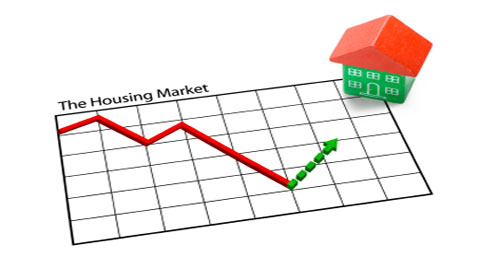
Real Estate Recovery?

Over the past few years, there have been thousands of news stories covering the housing market.  Through all of the statistics and advice given out, the general public must be lost.  It seems as if the outlook for the housing market changes, depending on who's eyes you might be looking through.

Harry Truman once said "It's a recession when your neighbor loses his job, it's a depression when you lose yours."  After watching this roller-coaster of an economic adjustment, this phrase rings true more and more often.

S&P's Case-Schiller Home Price Indices based on peaks and troughs in the market trends.  The have labeled the spring of 2009 the bottom of the housing market, but many experts say that another nationwide bottom - a second dip - will be announced soon.

What is interesting, in my opinion, is that the National Bureau of Economic Research recently stated that the "recession" has been over for more than a year.  According to them, the "recession" was over when the economy stopped contracting and began to expand.

So why are people not dancing in the streets?  It's simple...

Perception.

The current housing crisis continues to be "real" to the general American public when things "hit home" - literally.  It wasn't until the general American lost their job and realized they couldn't sell the home for what they owed on it.  It wasn't until their mortgage payment began increasing and they realized they couldn't refinance the loan because of a low appraisal at their current balance.  It wasn't until a listing agent sat down with them and told them what the comparable sales looked like for their neighborhood.

The Case-Shiller sees recovery as a return of home values to their mid-decade peaks.  Alan Greenspan, on the other hand, thinks recovery won't be here until housing prices rise another 10% from the status quo.

Is it easy to see how important perception is?  Every analyst and expert will shout something different about the exact definition of "recovery," which means it will only get more confusing.


If you, as a consumer, are looking for the experts to give you a date signaling the end of this market adjustment, you're searching for the impossible.  The fact is, most homeowners in America won't think the market has "recovered" until their mental target value for their home is reached.  Most buyers, alternately, won't think recovery will be here until they've been priced out at the value they recently purchased.

In every household, there is only one person who can dictate where the recovery is at to-date - you.